FOR IMMEDIATE RELEASE
9 March 2000
NISSAN JOINS PARTNERSHIP TO PROMOTE FUEL CELL TECHNOLOGY
Nissan is furthering its commitment to fuel cell vehicle development by joining the California Fuel Cell Partnership. The partnership is a voluntary initiative to advance the new technology that could provide a practical, affordable and completely environmentally-friendly transport solution.
The partnership will place about 50 fuel cell passenger cars and buses on the road between 2000 and 2003. By demonstrating the fuel cell powered electric vehicles under real day-to-day driving conditions, the partnership will focus on raising consumer awareness and exploring the path to commercialisation of fuel cell technology.
The partnership is a public-private venture that involves car makers, energy providers, a fuel cell company and various government agencies, including the California Air Resources Board, the California Energy Commission, and the US Department of Energy.
“Nissan’s proven environmental track record and years of experience in alternative fuel technologies will complement the partnership. We’re excited to have them on board,” said Alan Lloyd, Chairman of the California Air Resources Board.
Debra Sanchez Fair, vice president, corporate communications from
Nissan North America added, “This partnership provides Nissan with an
Nissan joins partnership to promote fuel cell technology…2
opportunity to explore ways to develop environmentally beneficial technology. Fuel cell technology holds a great deal of promise and the partnership will help us to realise its potential.”
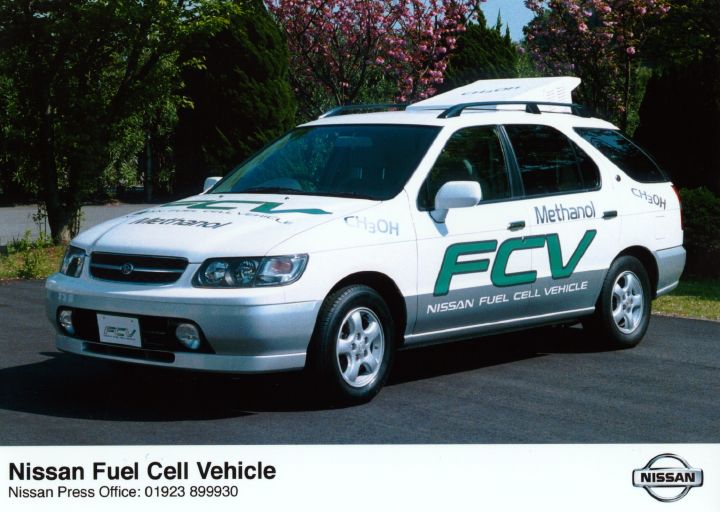
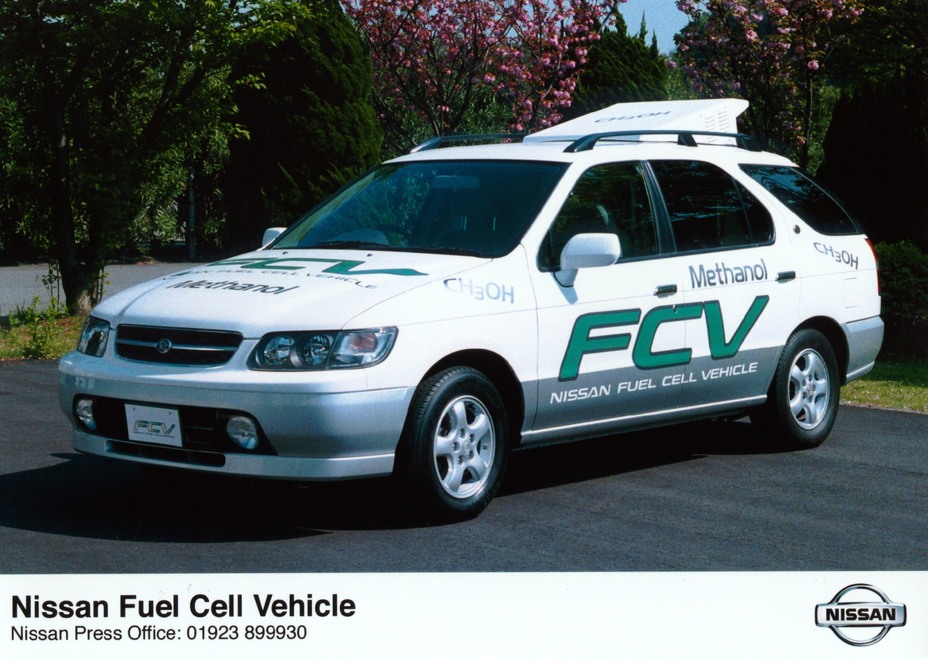
Nissan’s fuel cell vehicles react water and methanol to produce the hydrogen that all fuel cells need to create electrical power. The methanol system eliminates the need for storing hydrogen on board vehicles, which is seen as a drawback. Methanol is also highly practical because it can be produced relatively easily from natural gas and other sources.
The methanol reaction, which creates the hydrogen for the fuel cell, is also very clean. It produces negligible nitrogen oxides (NOx) because it reacts at a low temperature. Hydrocarbon (HC) and carbon monoxide (CO) emissions are also kept to low levels, making it possible to obtain exhaust gas as clean as the air.
In 1999, Nissan received the prestigious Climate Protection Award from the US Environmental Protection Agency for its efforts to address global warming, to reduce hydrofluorocarbons and to improve fuel economy in Nissan vehicles.
ends…
For further information, please contact:
Frank Shepherd, Corporate Affairs Administrator 01923 899930
Email: frank.shepherd@nissan.co.uk
Stewart McKee, Corporate Affairs Manager 01923 899930
Email: stewart.mckee@nissan.co.uk
All Nissan news releases can be downloaded from the Newspress website at http://www.newspress.co.uk
26237/090300
Editor’s Notes:
(1) A fuel cell is essentially a clean power source because it emits only water as a byproduct of electrochemical reactions. When methanol is reacted, the burner that supplies heat to the reactor emits exhaust gas, but the use of a catalyst in the conversion process achieves highly efficient combustion at low temperatures. As a result, virtually no NOx, CO, HC or other harmful substances are produced.
(2) Methanol is produced from natural gas, which is expected to be a substitute fuel for petroleum in the future. It will be possible to produce methanol from renewable energy sources in the future, including biomass, hydrogen gas and carbon dioxide gas.
(3) The methanol fuel cell system provides electric power control by switching between a fuel cell-powered driving mode and a battery-powered driving mode according to the operating conditions. A neodymium magnet synchronous traction motor, lithium-ion batteries and other high-performance components have been used to achieve a more compact system that delivers enhanced efficiency. Moreover, the motor serves as a generator during regenerative braking to produce electricity for charging the batteries. This selective and optimal use of onboard power sources further enhances the practical efficiency of the methanol fuel cell system to achieve a substantial improvement in overall energy efficiency.